
How are Insects Immunologically different from other animals?
Invertebrates (e.g. insects) are biochemically and physiologically distinct from vertebrates (e.g. reptiles, birds, mammals, etc).
5/8/20242 min read
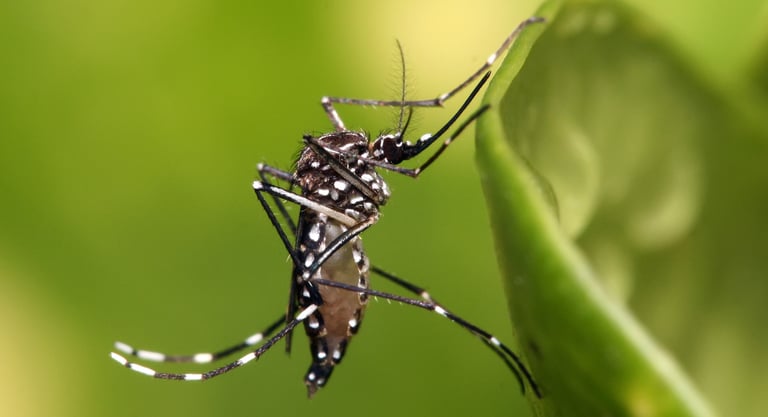
Insects (invertebrates) and vertebrates (ie.birds, reptiles, and mammals) have fundamentally different immune systems, shaped by hundreds of millions of years of separate evolution.
Insect vs. Vertebrate Immunology: Key Biological Differences
Innate vs. Adaptive Immunity: The most profound difference is that insects rely exclusively on innate immunity, while vertebrates possess both innate and adaptive immunity.
Vertebrates have B and T lymphocytes capable of generating antigen-specific responses, immunological memory (via memory B/T cells), and antibody production (immunoglobulins).
Insects have no lymphocytes, no antibodies, and no MHC (Major Histocompatibility Complex) molecules. Every immune response is general and non-specific.
No Immunological Memory — But Persistent Viral Tolerance as a Functional Analog
Because insects lack adaptive immunity, they cannot "remember" a pathogen in the vertebrate sense. However, insects have evolved a remarkable alternative strategy: persistent, non-detrimental viral infections. Many insects, particularly vectors like Aedes mosquitoes, harbor persistent viruses — including insect-specific flaviviruses and other endogenous viral elements — that establish long-term infections without causing overt pathology. These Arboviruses evolved Hybrid genome components that allow infection and growth in two phylogenetically distinct hosts that have completely distinct genetic and biochemical environments. Unlike in vertebrates, rather than clearing these viruses, the insect immune system reaches a homeostatic equilibrium with them. Insects rely heavily on RNA interference (RNAi) — particularly the siRNA and piRNA pathways — as their primary antiviral defense mechanism. This is fundamentally different from vertebrates, which suppress viruses mainly through interferon signaling, NK cells, and cytotoxic T lymphocytes. This positions RNAi not merely as a reactive antiviral tool, but as a dynamic regulator of the insect virome — balancing tolerance of persistent infections against resistance to new ones, preventing both viral over-replication and immunopathology. .
Critically, these persistent infections can confer Superinfection Exclusion (SIE) — a phenomenon in which a resident viral infection blocks or significantly suppresses a secondary infection by a related (and sometimes unrelated) virus. SIE has been documented in mosquitoes where persistent insect-specific viruses interfere with the superinfection of arboviruses like dengue, Zika, and chikungunya, reducing their replication and potentially limiting transmission to vertebrate hosts. While not mechanistically equivalent to vertebrate immunological memory, SIE represents a biologically convergent outcome: prior exposure to one virus shapes the outcome of subsequent viral challenge — achieved through entirely different molecular machinery.
Summary
Insects are immunologically distinct from vertebrates not only in their lack of adaptive immunity, but in their fundamentally different philosophy of viral management. Rather than eliminating all viral infections, insects frequently tolerate persistent viruses, achieving a regulated coexistence that can, through Superinfection Exclusion, paradoxically protect against more dangerous secondary infections. This presents a potential mechanism that can be exploited to control pathogenic viral infections in insects by using asymmetric, non-pathogenic symbiotes.
Contact
Reach out for partnerships or inquiries
Phone
info@vacunax.com
+1-626-437-7258
© 2026. Vacunax Inc. All rights reserved.

